
Impact of Mitochondrial Dynamics on Stem Cell Function: Insights from Physiology, Diseases and Aging

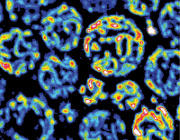
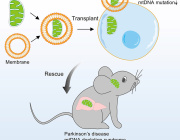
Dr. Mireille Khacho, from Faculty of Medicine, University of Ottawa, Canada will be joining the Targeting Mitochondria 2021 World Congress, which will be held October 27-29, 2021 and will present her study on "The Impact of Mitochondrial Dynamics on Stem Cell Function: Insights from Physiology, Diseases and Aging".
Targeting Mitochondria 2021 Congress
October 27-29, 2021 - Berlin & Virtual Congress
www.targeting-mitochondria.com
Nuclear Sensing of Breaks in Mitochondrial DNA Enhances Immune Surveillance
 Dr. Agnel Sfeir from Memorial Sloan Kettering Cancer Center, USA, will give a presentation on :Nuclear Sensing of Breaks in Mitochondrial DNA Enhances Immune Surveillance"
Dr. Sfeir will describe mitochondrial DNA double-strand breaks (mtDSBs) as toxic lesions that compromise the integrity of mitochondrial DNA (mtDNA) and alter mitochondrial function. Communication between mitochondria and the nucleus is essential to maintain cellular homeostasis; however, the nuclear response to mtDSBs remains unknown. Here, using mitochondrial-targeted transcription activator-like effector nucleases (TALENs), we show that mtDSBs activate a type-I interferon response that involves the phosphorylation of STAT1 and activation of interferon-stimulated genes. After the formation of breaks in the mtDNA, herniation mediated by BAX and BAK releases mitochondrial RNA into the cytoplasm and triggers a RIG-I-MAVS-dependent immune response. We further investigated the effect of mtDSBs on interferon signalling after treatment with ionizing radiation and found a reduction in the activation of interferon-stimulated genes when cells that lack mtDNA are exposed to gamma irradiation. We also show that mtDNA breaks synergize with nuclear DNA damage to mount a robust cellular immune response. Taken together, we conclude that cytoplasmic accumulation of mitochondrial RNA is an intrinsic immune surveillance mechanism for cells to cope with mtDSBs, including breaks produced by genotoxic agents.
Targeting Mitochondria 2021 Congress
October 27-29, 2021 - Berlin & Virtual Congress
www.targeting-mitochondria.com
Optimization of Energy Homeostasis in Old Age by SIRT6
 Prof. Haim Cohen, head of the Molecular Mechanism of Aging Laboratory at Bar-Ilan University, Israel will be joining the Targeting Mitochondria 2021 Congress and give a presentation entitled "Optimization of Energy Homeostasis in Old Age by SIRT6".
Prof. Cohen's Studies in model organisms showed that the activity of the Sir2 family of NAD+-dependent protein deacetylases (sirtuins) is important in regulating lifespan in yeast, worms, and flies. He shows that overexpression of mammalian sirtuin SIRT6 in mice leads to a reduction in frailty and lifespan extension by ~30%. To do so, SIRT6 restores energy homeostasis of old animals through an improvement in the utilization of two major gluconeogenic precursors, lactate and glycerol.
Targeting Mitochondria 2021 Congress
October 27-29, 2021 - Berlin & Virtual Congress
www.targeting-mitochondria.com
A Potential Mitochondrial Link Between Life Stress and the Reversibility of Hair Greying in Humans
 Dr. Martin Picard, Associate professor of behavioral medicine at Columbia University Vagelos College of Physicians and Surgeons, USA will be joining the Targeting Mitochondria 2021 Congress and give a presentation entitled "A Potential Mitochondrial Link Between Life Stress and the Reversibility of Hair Greying in Humans".
Life stress causes neuroendocrine and metabolic alterations that influence mitochondria; and in turn, mitochondria produce signals and energy that influence pigment production that color our hairs. This presentation will describe a new approach to quantify human hair pigmentation patterns, demonstrating that human hair graying is rapidly reversible and linked to life stress. Individual hairs transitioning from their young-dark to old-white states, and reverting back to dark, show specific mitochondrial proteomic recalibrations pointing to a threshold-based metabolic mechanism for hair greying.
Targeting Mitochondria 2021 Congress
October 27-29, 2021 - Berlin & Virtual Congress
www.targeting-mitochondria.com
Introduction Remarks: Past, Present and Future
 Dr. Egbert Mik, from University Medical Center Rotterdam, The Netherlands, will join the 12th Targeting Mitochondria Congress in October 2021, to give a talk entitled "Introduction Remarks: Past, Present and Future".
During the sessin, Dr. Mik will explain the challenge of qualitative and quantitative assessment of mitochondrial function in vitro and in vivo, as well as future perspectives regarding this subject.
Targeting Mitochondria 2021 Congress
October 27-29, 2021 - Berlin & Virtual Congress
www.targeting-mitochondria.com
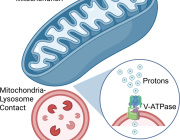
Dysregulation of Mitochondria-Lysosome Contacts by GBA1 Dysfunction in Dopaminergic Neuronal Models of Parkinson’s Disease

Dr. Dimitri Krainc, from the Northwestern University Feinberg School of Medicine, Chicago in USA will be will be joining the Targeting Mitochondria 2021 Congress and will demonstrate his study regarding the "Dysregulation of Mitochondria-Lysosome Contacts by GBA1 Dysfunction in Dopaminergic Neuronal Models of Parkinson’s Disease".
Dr. Krainc confirms that he recently identified the formation of direct mitochondria-lysosome membrane contacts that mark sites for lysosomal regulation of mitochondrial networks. However, mitochondrial contacts regulate lysosomal dynamics providing a new angle to studies of these organelles in neurodegenerative diseases.
Targeting Mitochondria 2021 Congress
October 27-29, 2021 - Berlin & Virtual Congress
www.targeting-mitochondria.com
The One-Carbon Pool Controls Mitochondrial Energy Metabolism via Complex I and Iron-Sulfur Clusters

Dr. Anna Wredenberg, from Max Planck Institute Biology of Ageing–Karolinska Institutet Laboratory, Karolinska Institutet, Sweden will be joining the Targeting Mitochondria 2021 World Congress, and will deliver a speech concerning "The One-Carbon Pool Controls Mitochondrial Energy Metabolism via Complex I and Iron-Sulfur Clusters".
Accoring to her recent studies, Dr. Wredenberg confirms that vital intermediary steps of one-carbon metabolism are localized to mitochondria, but it remains unclear how it connects to mitochondrial function. Additionally,The one-carbon metabolite and methyl group donor S-adenosylmethionine (SAM) is pivotal for energy metabolism. A gradual decline in mitochondrial SAM (mitoSAM) causes hierarchical defects in fly and mouse, comprising loss of mitoSAM-dependent metabolites and impaired assembly of the oxidative phosphorylation system. Complex I stability and iron-sulfur cluster biosynthesis are directly controlled by mitoSAM levels, while other protein targets are predominantly methylated outside of the organelle before import.
However, the mitoSAM pool follows its cytosolic production, establishing mitochondria as responsive receivers of one-carbon units.
Targeting Mitochondria 2021 Congress
October 27-29, 2021 - Berlin & Virtual Congress
www.targeting-mitochondria.com
The Mitochondriotropic DecylTPP Group Lowers Mitochondrial OXPHOS Supercomplex Levels and Induces a Glycolytic Switch
 Prof. Werner Koopman, from the Department of Biochemistry, Radboud Institute for Molecular Life Sciences, will join the Targeting Mitochondria 2021 Congress and will present a talk entitled "The Mitochondriotropic DecylTPP Group Lowers Mitochondrial OXPHOS Supercomplex Levels and Induces a Glycolytic Switch".
Prof. Koopman will discuss the bioenergetic effects of mitochondria-targeted Trolox(MitoE10), in comparison with mitochondria-targeted ubiquinone (MitoQ10) and two mitochondria-targeting moieties (decylTPP, TPMP). Incubation with these molecules did not greatly affect cell viability of primary human skin fibroblasts (PHSFs) from healthy individuals and a patient with Leigh Syndrome (LS). Unexpectedly, MitoE10, MitoQ10 and decylTPP reduced the levels and activity of the first oxidative phosphorylation complex (complex I or CI) and of the amount of CI+CIII-containing OXPHOS super complexes. Functionally, these effects were associated with reduced cellular oxygen consumption rates, increased extracellular acidification rates , a less negative mitochondrial membrane potential (deltaPSI), a decreased mitochondrial size and elevated levels of hydroethidine-oxidizing ROS. Collectively, these results demonstrate that MitoE10, MitoQ10 and decylTPP lower the levels of CI and CI-containing super complexes in PHSFs, leading to mitochondrial dysfunction and glycolytic switch induction.
Targeting Microbiota 2021 Congress
October 20-22, 2021 - Paris, France & Online
www.targeting-mitochondria.com