Brain Mitochondria, Aging and Parkinson’s Disease

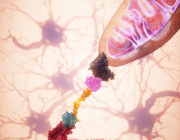
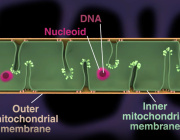
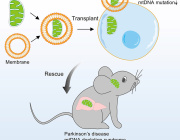
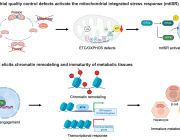
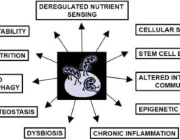
This paper reconsiders the role of mitochondria in aging and in Parkinson's Disease (PD). The most important risk factor for PD is aging. Alterations in mitochondrial activity are typical of aging. Mitochondrial aging is characterized by decreased oxidative phosphorylation, proteasome activity decrease, altered autophagy, and mitochondrial dysfunction. Beyond declined oxidative phosphorylation, mitochondrial dysfunction consists of a decline of beta-oxidation as well as of the Krebs cycle. Not inherited mitochondrial DNA (mtDNA) mutations are acquired over time and parallel the decrease in oxidative phosphorylation. Many of these mitochondrial alterations are also found in the PD brain specifically in the substantia nigra (SN). mtDNA deletions and development of respiratory chain deficiency in SN neurons of aged individuals as well as of individuals with PD converge towards a shared pathway, which leads to neuronal dysfunction and death. Finally, several nuclear genes that are mutated in hereditary PD are usually implicated in mitochondrial functioning to a various extent and their mutation may cause mitochondrial impairment. In conclusion, a tight link exists between mitochondria, aging, and PD.

News source: www.mdpi.com
Authors: Mario Rango and Nereo Bresolin

Biochemist, physicist team to see antibacterial triclosan(TCS) deform mitochondria


Julie Gosse, a University of Maine associate professor of molecular and biomedical sciences, has scanned the supermarket aisles for products that contain (TCS), a synthetic antibacterial agent.

Since the '90s, TCS has been in a slew of consumer products, including facial cleansers, toothpaste, mouthwash and hand sanitizers.

For years, Gosse has studied TCS, which for decades also has been used as a hospital scrub to reduce risk of infection.

She became interested in examining triclosan when listening to a talk by Environmental Protection Agency scientist Susan Richardson and noting that the molecular structure of TCS resembles the molecular structure of dioxins, which are toxic environmental pollutants.

In 2016, the Food and Drug Administration banned triclosan from consumer bar soaps, liquid soaps and body washes. At that time, the FDA challenged manufacturers to either prove TCS was more effective at killing germs than plain soap, or to remove it from their soap product within a year.

The antimicrobial agent, which is readily absorbed into the skin and the lining of the mouth, has recently been found to have detrimental effects on human fertility, development, thyroid function and immunology, and has been associated with increased occurrence of asthma.

Then, about six months ago, the FDA also announced a ban on products such as hand washes and antiseptic rubs containing TCS that are used in medical settings.

There's no such ban on Colgate Total, the popular toothpaste that contains TCS. That's because it's been found to be more effective at treating gingivitis than toothpaste without it.

Gingivitis is an important health concern as it can lead to tooth loss. And research has indicated the bacteria that causes periodontitis can enter a person's bloodstream and harm the heart and lungs.

Gosse understands why people with gingivitis would use Colgate Total; she just wants millions of people without gingivitis who also use the product to be aware of possible risks.

"Our job is to do the best science we can do and make people aware," she says. "As scientists, we communicate our findings, and the public or companies or government decides what they should do."

 To read more about news, please visit the news source:

News source: https://medicalxpress.com/news/2018-05-biochemist-physicist-team-antibacterial-tcs.html

Mitochondria behind blood cell formation

New Northwestern Medicine research published in Nature Cell Biology has shown that mitochondria, traditionally known for their role creating energy in cells, also play an important role in hematopoiesis, the body's process for creating new blood cells."Historically, mitochondria are viewed as ATP—energy—producing organelles," explained principal investigator Navdeep Chandel, PhD, the David W. Cugell Professor of Medicine in the Division of Pulmonary and Critical Care Medicine. "Previously, my laboratory provided evidence that mitochondria can dictate cell function or fate independent of ATP production. We established the idea that mitochondria are signaling organelles."In the current study, Chandel's team, including post-doctoral fellow Elena Ansó, PhD, and graduate students Sam Weinberg and Lauren Diebold, demonstrated that mitochondria control hematopoietic stem cell fate by preventing the generation of a metabolite called 2-hydroxyglutarate (2HG). The scientists showed that mice with stem cells deficient in mitochondrial function cannot generate blood cells due to elevated levels of 2HG, which causes histone and DNA hyper-methylation."This is a great example of two laboratories complementing their expertise to work on a project," said Chandel, also a professor of Cell and Molecular Biology and a member of the Robert H. Lurie Comprehensive Cancer Center of Northwestern University.Paul Schumacker, PhD, professor of Pediatrics, Cell and Molecular Biology and Medicine, was also a co-author on the paper.Chandel co-authored an accompanying paper in Nature Cell Biology, led by Jian Xu, PhD, at the University of Texas Southwestern Medical Center, which demonstrated that initiation of erythropoiesis, the production of red blood cells specifically, requires functional mitochondria."These two studies collectively support the idea that metabolism dictates stem cell fate, which is a rapidly evolving subject matter," said Chandel, who recently wrote a review in Nature Cell Biology highlighting this idea. "An important implication of this work is that diseases linked to mitochondrial dysfunction like neurodegeneration or normal aging process might be due to elevation in metabolites like 2HG."

Read more at: https://phys.org/news/2017-06-mitochondria-blood-cell-formation.html#

Imaging Method Evaluates Cell Functional Changes and Wound Healing

Optical redox ratio maps of fibroblasts isolated from young and aged rats. Red regions correspond to high redox ratios, while blue regions correspond to low ratios. Images courtesy of Olivia Kolenc and Kyle Quinn.

Kyle Quinn, assistant professor of biomedical engineering at the University of Arkansas, has published a review highlighting recent advances in autofluorescence imaging and discussing its role in evaluating cell metabolism.

Autofluorescence is the emission of light by molecules naturally present in cells and tissue when those molecules have absorbed light.

Quinn and graduate student Olivia Kolenc have published an article in Antioxidants & Redox Signaling, explaining that human cells and tissues contain naturally fluorescent molecules that can be imaged and used to assess cell metabolism for a broad spectrum of biomedical applications, including tissue engineering and regenerative medicine.

Autofluorescence imaging of these naturally fluorescent molecules – nicotinamide adenine dinucleotide (NADH) and flavin adenine dinucleotide (FAD) – can allow researchers to assess the structural organization of mitochondria and biochemical details related to cell metabolism. This can be done through a measurement called an optical redox ratio, which quantifies the relative concentrations of NADH and FAD. The three-dimensional distribution of NADH and FAD within cells can be quantified non-invasively in living tissue by using a multiphoton microscope.

Mitochondria are the organelles – or specialized structures – within cells that are responsible for respiration and energy production.

Traditionally, this imaging technique has been used to monitor cell metabolism during hypoxia and cancer development, Quinn said. But he and Kolenc expect that continued improvement in instrumentation and analysis with these methods will lead to wider applications and further advances in basic science, preclinical research and clinical management of disease. For example, part of Quinn’s research focuses on applying this imaging technique to the study of wound healing.

Quinn is also a co-author of a new study by researchers at Tufts University, where he was a postdoctoral fellow after receiving his doctorate at the University of Pennsylvania. The study highlights some of these new applications and methods for autofluorescence imaging of NADH and FAD.

“Autofluorescence intensity can be a useful metric to noninvasively assess metabolic and functional cellular changes for a variety of biochemical applications,” Quinn said. “We here at the U of A are particularly excited about its use in evaluating wound healing.”

Quinn’s research is supported by the National Institutes of Health, Department of Defense, and the Arkansas Biosciences Insititute. In September of 2017, he received a $1.7 million grant from the NIH to continue developing autofluorescence imaging methods to quantify and understand age-related delays in skin wound healing.

Also in 2017, Quinn published research demonstrating that during the weeks following a heart attack, the injured heart wall acquires more collagen fibers that are significantly less stiff due to a lack of naturally fluorescent fiber crosslinks. That study appeared in Nature Publishing Group’s Scientific Reports.

News source: https://researchfrontiers.uark.edu

Can Vitamins and Supplements Help Patients with Mitochondrial Disease?

Defects in mitochondria, the tiny structures that power our cells by functioning as biological batteries, cause an array of complex, often life-threatening disorders that can affect any and all organs and systems. In the absence of validated, effective drug treatments, patients with mitochondrial disease often take a variety of vitamins and supplements, substances that are largely unstandardized, unregulated and unproven.

Experts in mitochondrial medicine propose to remedy that situation, calling for systematic scientific studies in cells and animals to lay the foundation for clinical trials of precise nutritional interventions for patients with energy deficiency diseases. 

 “We’re aiming to raise the bar for clinical treatments,” said Marni J. Falk, MD, Executive Director of the Mitochondrial Medicine Frontier Program at Children’s Hospital of Philadelphia (CHOP). Falk co-authored a new analysis of nutritional interventions for mitochondrial disorders published Nov. 3 in the Annual Review of Pathology: Mechanisms of Disease. “Our major objectives were to review the basic scientific evidence for compounds already being used in mitochondrial disease patients and to advocate a framework for rigorously evaluating their safety and efficacy in this population.”

The review article represents the collaborative effort of expert co-authors from eight centers, including first author Adam J. Kuszak, PhD, of the Office of Dietary Supplements of the National Institute of Health (NIH). The current effort grew out of a 2014 NIH meeting focused on developing an evidence base for nutritional interventions in primary mitochondrial disorders.

“Our analysis made it clear how much more we need to learn about developing effective nutritional treatments for mitochondrial disease,” said co-author Zarazuela Zolkipli-Cunningham, MBChBD, a neuromuscular specialist and attending physician in CHOP’s Mitochondrial Medicine Frontier Program. “There’s a large gap between the compounds that patients are routinely using and the degree to which those compounds have been scientifically tested.”

For instance, Zolkipli-Cunningham pointed to an “astounding variety” of the supplement coenzyme Q10 (CoQ10), sold over the counter in diverse versions and dosages. It is marketed as an antioxidant to reduce biological damage from reactive oxidant molecules.

However, she pointed out, there is no definitive evidence for health benefits from CoQ10. Moreover, there are no standardized formulations for this supplement, so patients may receive widely varying ingredients from one product to another. A third consideration is that a given supplement may act differently in a healthy consumer than in an individual with a mitochondrial disorder, because defects in mitochondria have wide-ranging effects on cellular function. Finally, supplements may act very differently across different subtypes of mitochondrial disease.

“Anything that affects cellular function is biologically acting as a drug, whether you obtain it from a pharmacy or a health food store,” said Falk. “However, unlike prescription medications, which are closely regulated and standardized by the U.S. Food and Drug Administration, vitamins, dietary supplements, and medical foods are considered in our country to be in a separate regulatory category with much less stringent requirements. Their manufacturing standards are not as tightly regulated, and their claims are limited to optimizing general public health, not to treating specific diseases. So we know a lot less about their safety and efficacy in patients.”

 

To read the complete news, please follow the link to original news: http://www.chop.edu/news/can-vitamins-and-supplements-help-patients-mitochondrial-disease

Mitochondria in the Press & Media