Leucine Rewrites Mitochondrial Biology


- Details
- Published on 21 May 2026
A simple amino acid may control how mitochondria breathe, adapt, and survive. From amino acid metabolism to mitochondrial decision-making.
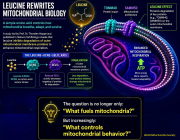
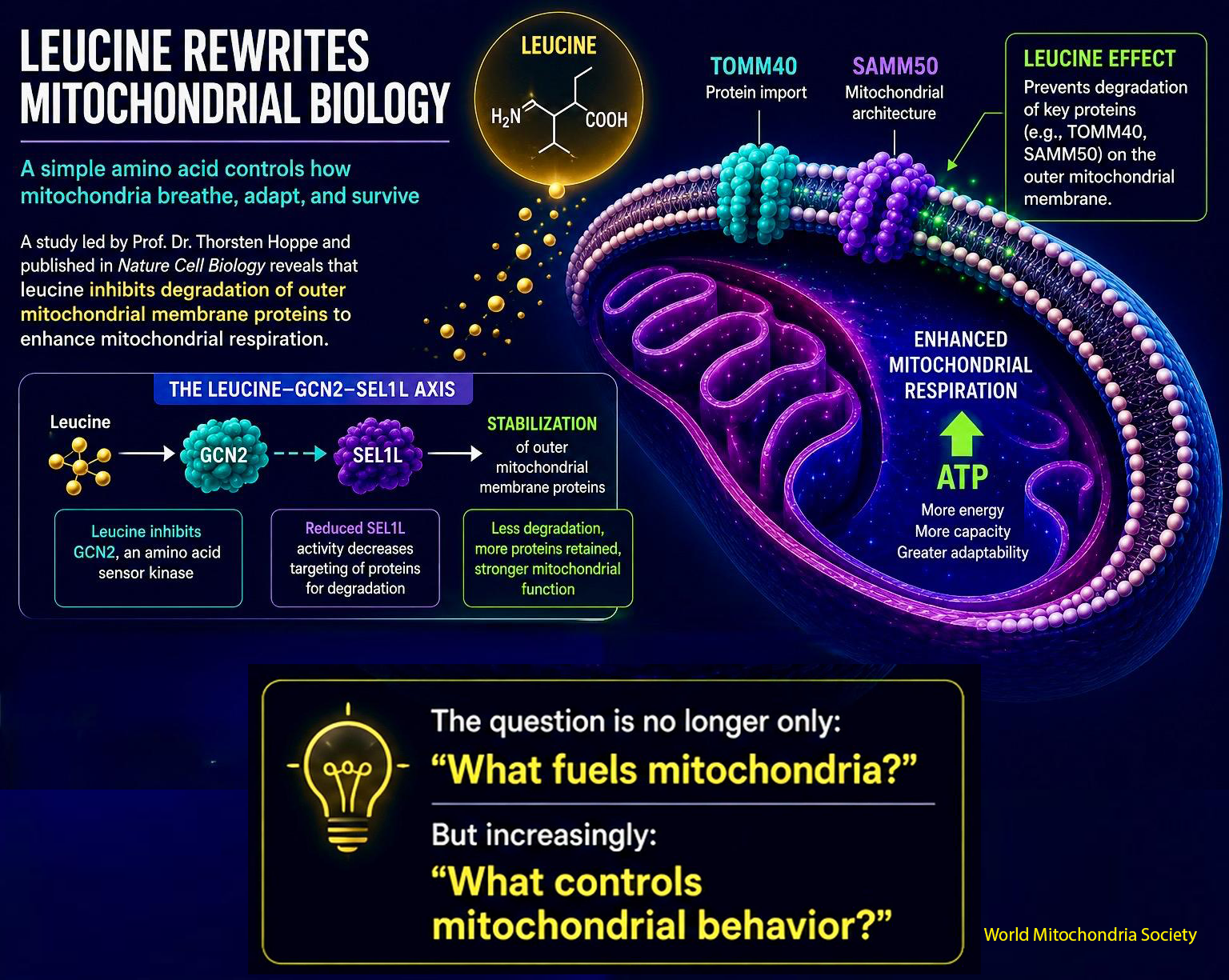
A new study led by Professor Dr. Thorsten Hoppe from the Institute for Genetics and the CECAD Cluster of Excellence on Aging Research, published in Nature Cell Biology under the title “Leucine inhibits degradation of outer mitochondrial membrane proteins to adapt mitochondrial respiration”, reveals that leucine is doing far more than supporting muscle protein synthesis.
Researchers discovered that leucine directly remodels mitochondrial function by protecting key proteins on the outer mitochondrial membrane from degradation.
Not Just Fuel: A Nutrient Signal With Mitochondrial Power
Leucine emerges as a direct regulator of mitochondrial protein stability
The work identifies a previously unknown leucine–GCN2–SEL1L axis linking nutrient sensing to mitochondrial proteostasis and respiration. Instead of merely acting as a metabolic substrate, leucine appears to function as a regulator of mitochondrial adaptability.
The Hidden Switch on the Mitochondrial Surface
Stabilizing TOMM40 and SAMM50 to boost respiratory capacity
The team showed that leucine suppresses the degradation of outer mitochondrial membrane proteins, including TOMM40 and SAMM50, key components of mitochondrial protein import and architecture. This stabilization expands the mitochondrial proteome and enhances respiratory activity.
Beyond Nutrition: Toward Mitochondrial Resilience
Implications for metabolism, fertility, cancer, and aging biology
The findings extend beyond dietary biology. Defects in leucine metabolism or mitochondrial protein turnover were linked to fertility defects in C. elegans and enhanced survival of human cancer cells.
This reinforces a major emerging concept in mitochondrial medicine: nutrients are not only fuels. They can also program mitochondrial identity, adaptability, and resilience.
Strategic Perspective
The question is no longer only “What fuels mitochondria?” but “What controls mitochondrial behavior?”
For years, leucine has been viewed mainly through anabolic signaling and mTOR activation. This study shifts the discussion toward mitochondrial proteostasis, organelle remodeling, and adaptive bioenergetics.
Important scientific caution: this is a mechanistic study, not a clinical nutrition recommendation. As emphasized by Marvin Edeas and Volkmar Weissig, Chairmen of World Mitochondria Society and scientific Board, these findings should not be interpreted as evidence that leucine supplementation improves mitochondrial function in patients. Clinical relevance will require dedicated translational and human studies.
Read the complete news here
Read the news on LinkedIn