When Mitochondria Are Damaged, Who Decides Cell Survival? From Mitophagy to Stress Signaling: The Next Frontier in Neurodegeneration


- Details
- Published on 23 September 2026
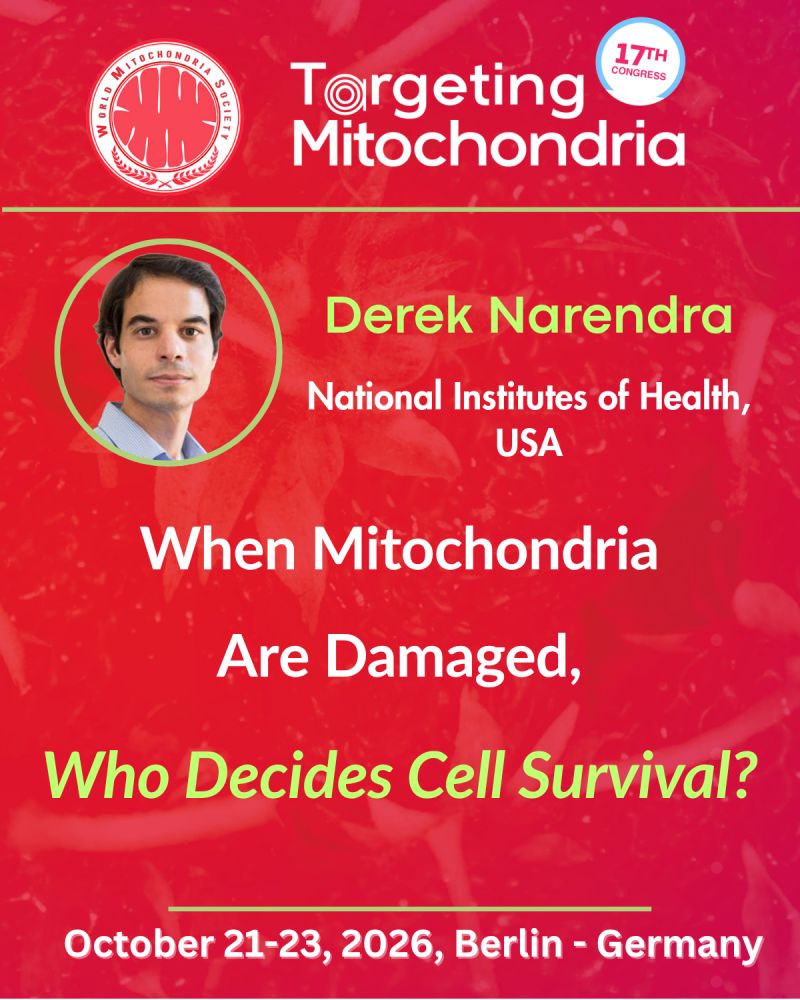 We are pleased to announce that Dr. Derek Narendra from The National Institutes of Health, USA, will join Targeting Mitochondria 2026 as a featured speaker.
Damage-Sensing in Mitochondrial Disorders: From Mitophagy to the Integrated Stress Response
Mitochondria are not passive victims of damage. They possess internal surveillance systems able to detect dysfunction, activate defense programs, and determine whether recovery remains possible.
Professor Narendra will explore how two major mitochondrial quality-control pathways interact in degenerative neurological disorders:
- PINK1–Parkin mitophagy selective elimination of damaged mitochondria
- OMA1–DELE1 mitochondrial integrated stress response (mt-ISR) metabolic adaptation to mitochondrial stress, particularly protein homeostasis
These pathways are often activated together, yet serve complementary functions:
- one removes defective mitochondria
- one helps the cell adapt and survive under stress
Using in vivo models of mitochondrial myopathy caused by protein misfolding, his team has shown that these pathways are essential for survival and may behave differently in living tissues compared with cultured cells.
Strategic Questions for Berlin
- Why do some cells recover while others degenerate?
- Can stress signaling be therapeutically tuned before irreversible damage occurs?
- Could neurodegeneration begin with failed mitochondrial damage sensing?
The future of mitochondrial medicine may not only be correcting mutations.
It may be understanding how cells detect danger, respond to stress, and choose survival or collapse.