Mitochondria Don’t Just Produce Energy. They Deliver It Directly to the Nucleus

- Details
- Published on 24 June 2026
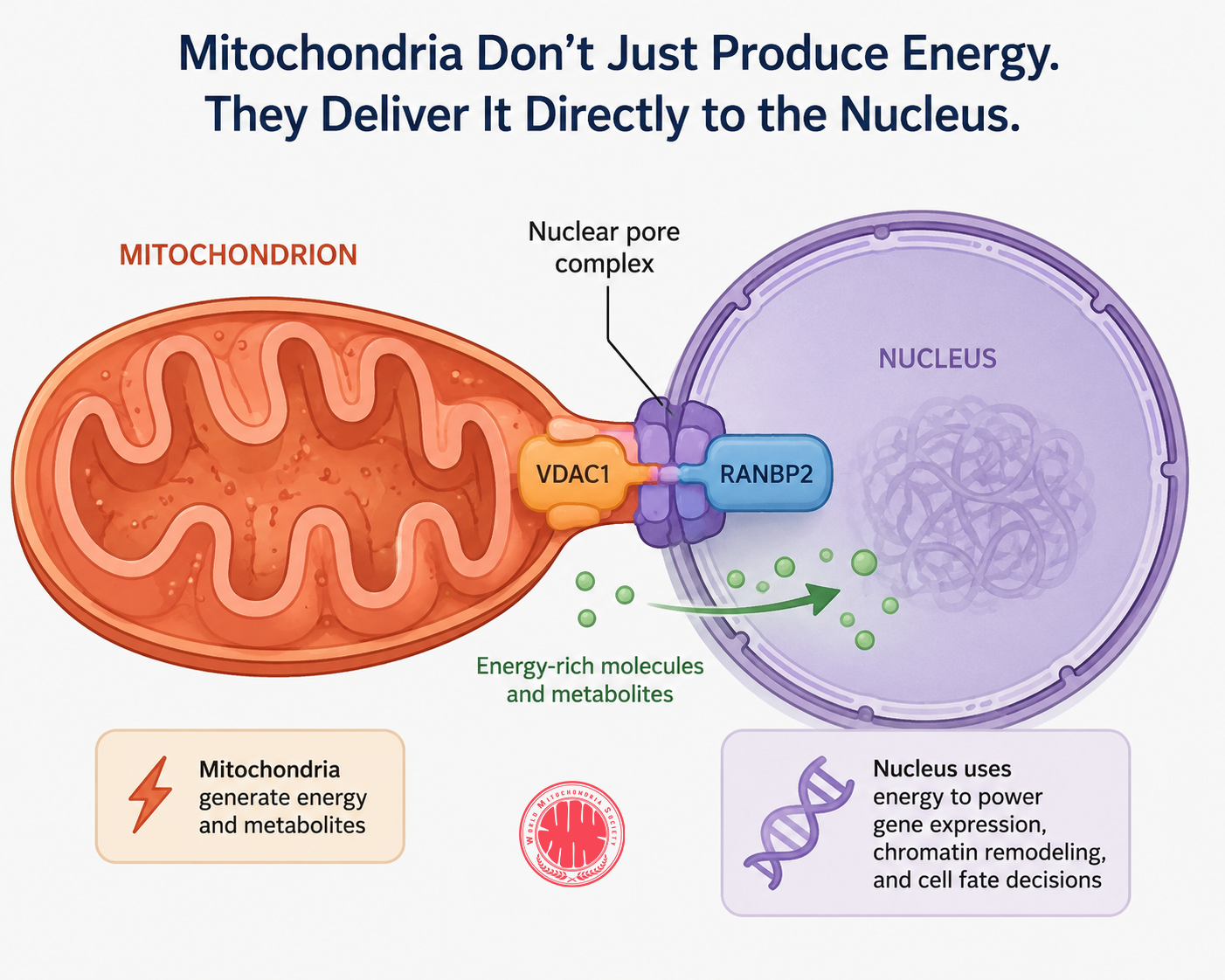
A Nature study reveals a direct mitochondrial–nuclear energy supply line that may reshape how we understand cell fate, development, and disease.
For decades, biology textbooks taught that mitochondria generate ATP, which then diffuses throughout the cell wherever energy is needed.
A new study published in Nature, led by Ivan Menendez-Montes and Hesham A. Sadek, challenges that long-standing view. Researchers have discovered that mitochondria establish direct physical contacts with the nucleus, creating what is essentially a dedicated energy supply line to the cell’s control center.
The team found that mitochondria dock at nuclear pore complexes through a specific interaction between the proteins VDAC1 and RANBP2. Rather than relying only on passive diffusion, this contact allows energy-rich molecules and metabolites to be delivered directly into the nucleus, where they support gene expression, chromatin remodeling, and cell differentiation.
The biological consequences were striking. When this mitochondrial–nuclear connection was disrupted, the nucleus rapidly lost its energy supply. Heart cells failed to mature correctly, and mouse embryos developed severe defects in the heart and nervous system, ultimately failing to survive.
This discovery introduces a new concept in mitochondrial biology. Mitochondria are not simply cellular power plants; they also act as precision energy distributors, delivering metabolic resources exactly where critical genetic decisions are made.
The implications extend far beyond developmental biology. Understanding how this mitochondrial–nuclear communication is regulated could reshape research into cardiovascular disease, aging, neurodegeneration, regenerative medicine, and cancer.
As mitochondrial research continues to evolve, the field is moving away from viewing mitochondria solely as ATP producers toward recognizing them as dynamic organizers of cellular function, signaling, and nuclear regulation.
Read the full article here
Read the news on LinkedIn