WMS 2026 Awards

- Details
- Published on 17 November 2026
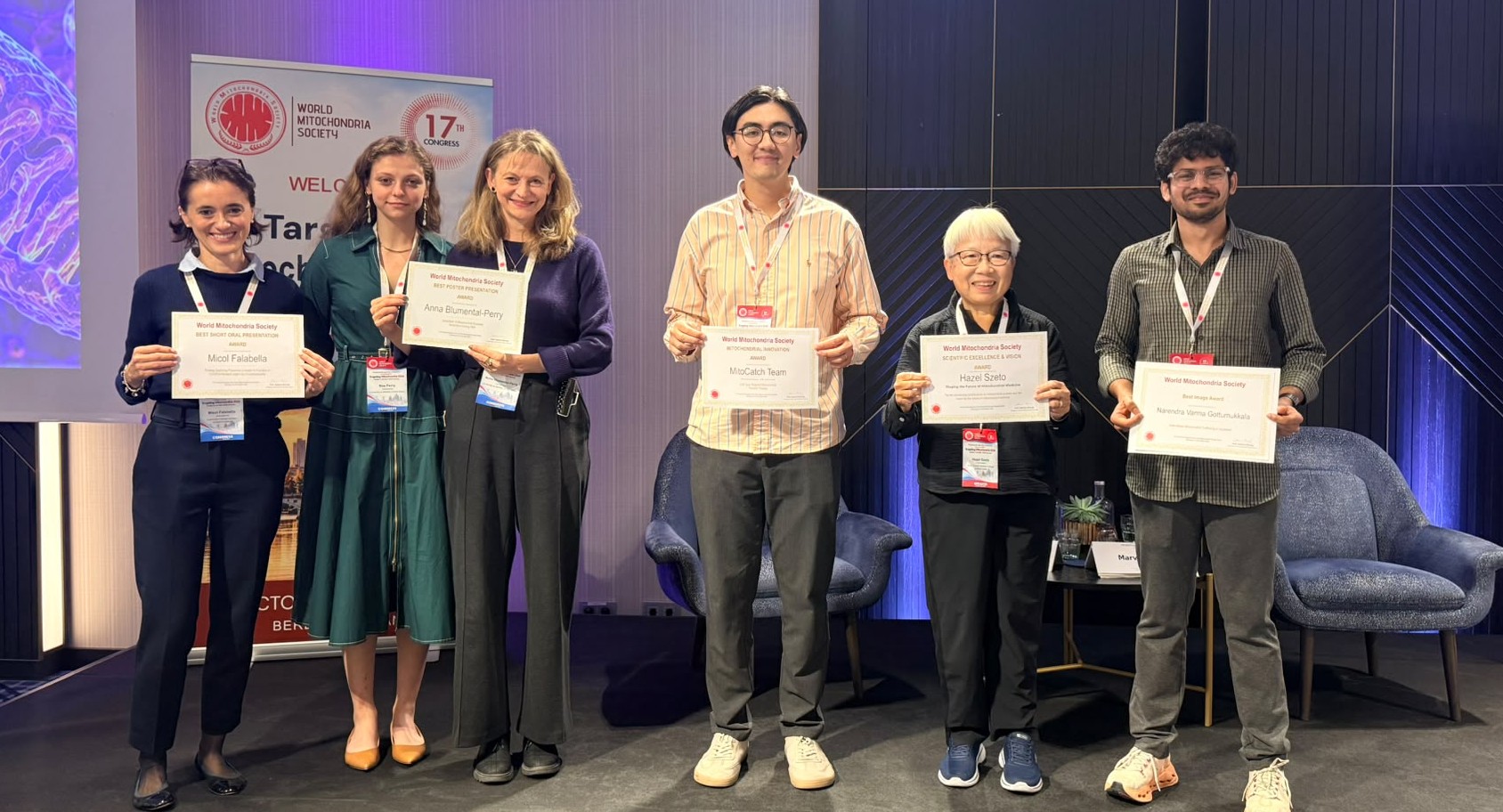
At Targeting Mitochondria 2026, the World Mitochondria Society honored four outstanding scientific contributions that perfectly reflect the spirit of WMS: bold ideas, rigorous science, and a dynamic vision of mitochondria. These awards celebrate discoveries that connect energy, communication, metabolism, and resilience, reminding us that mitochondria are not static structures, but active players shaping health, disease, and longevity.
| Scientific Excellence & Vision Award 2026 Awarded to Prof. Hazel Szeto,
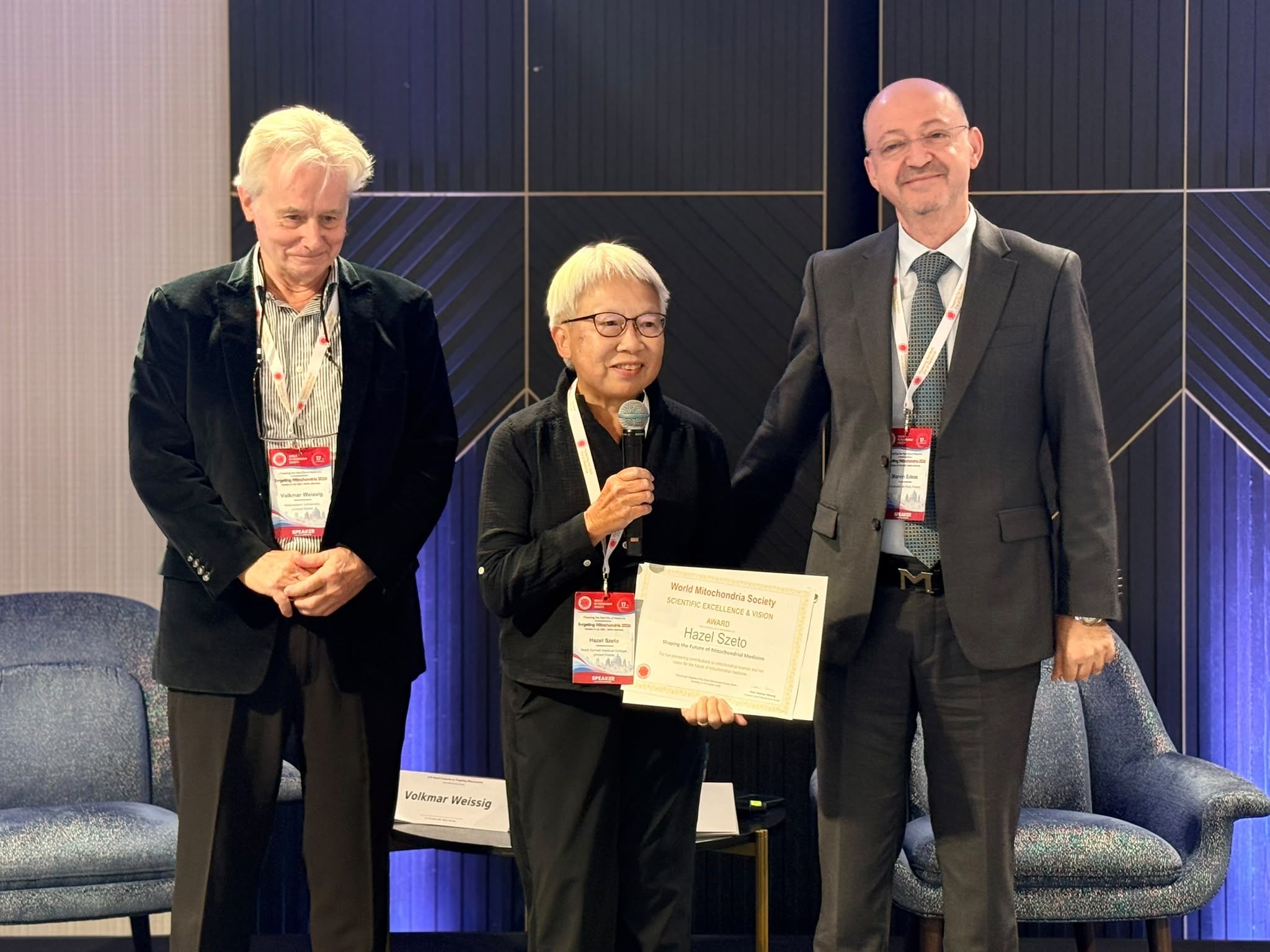
Prof. Hazel Szeto receives the WMS Scientific Excellence & Vision Award 2026. The World Mitochondria Society honours Prof. Hazel Szeto at Targeting Mitochondria 2026 in Berlin for her pioneering contributions to mitochondrial science and her vision for the future of mitochondrial medicine. Her work on mitochondria-targeted therapeutics has helped bring fundamental research closer to clinical practice. Her contribution to this congress addresses a question central to our community: how do we turn mitochondrial discoveries into treatments that benefit patients? This award recognises both her scientific achievements and the direction she has helped establish for the field. Presented by Volkmar Weissig and Marvin Edeas, MD, PhD, for her outstanding and significant achievements. |
|
|
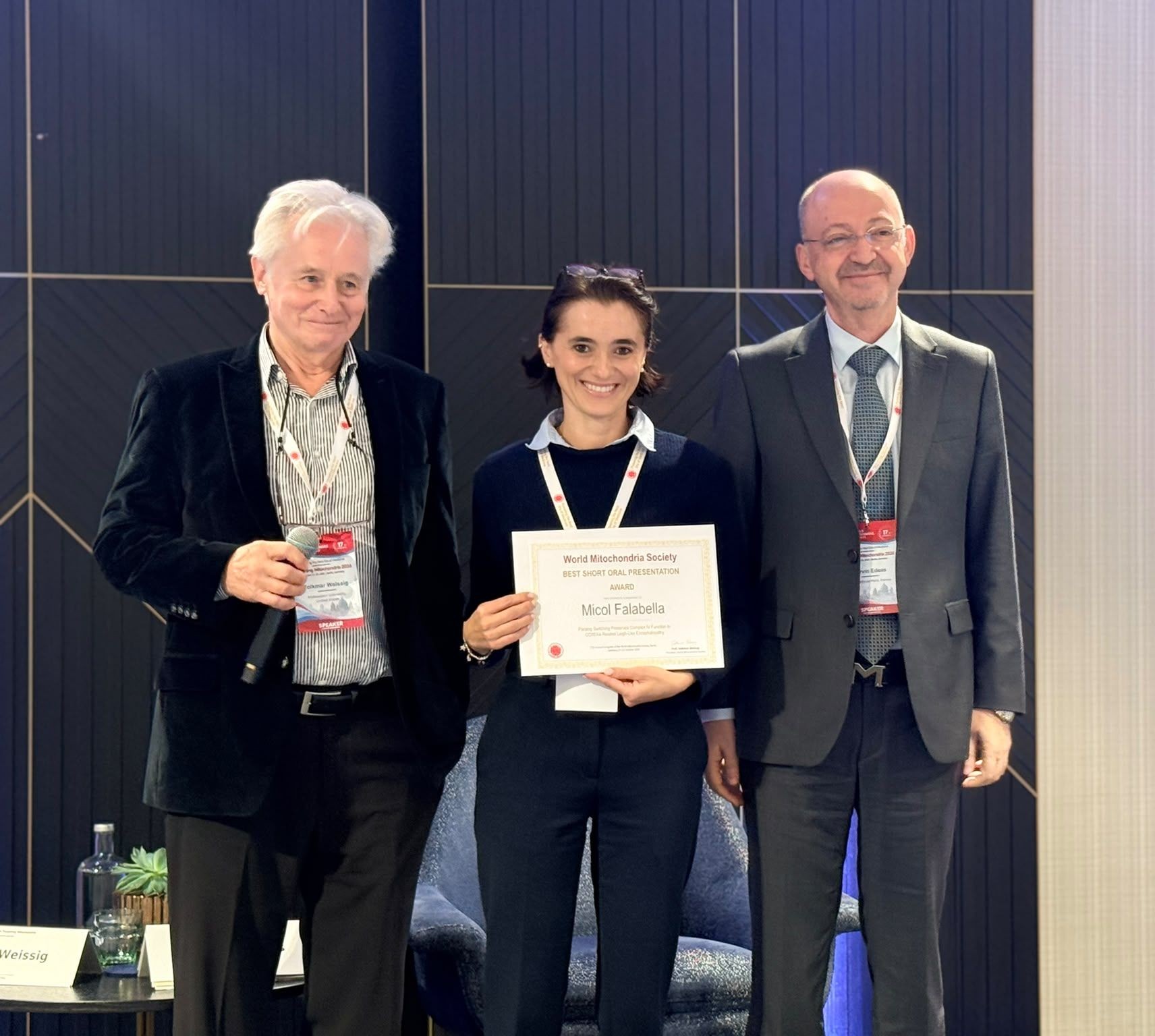
Best Short Oral Communication Award 2026 Awarded to Dr. Micol FalabellaUniversity College London, United Kingdom
Her team investigated a rare Leigh-like encephalopathy, a serious neurological disorder associated with impaired mitochondrial energy production. Their discovery is particularly interesting: when a protein essential for mitochondrial complex IV is defective, a closely related protein may partially compensate, allowing mitochondria to preserve some of their function. Could this natural rescue mechanism eventually inform a new therapeutic strategy? Rather than focusing exclusively on correcting defective genes, this research suggests another possibility: helping cells activate or strengthen their own compensatory mechanisms. An important scientific finding with potential implications for future treatments, although clinical applications remain to be demonstrated. Congratulations to Dr. Falabella and her international research team! |
|
|
|
|
Best Poster Award 2026 Awarded to Dr. Anna Blumental PerryUniversity at Buffalo, United States
Congratulations to Dr. Anna Blumental Perry and her colleagues on this recognition by the World Mitochondria Society. |
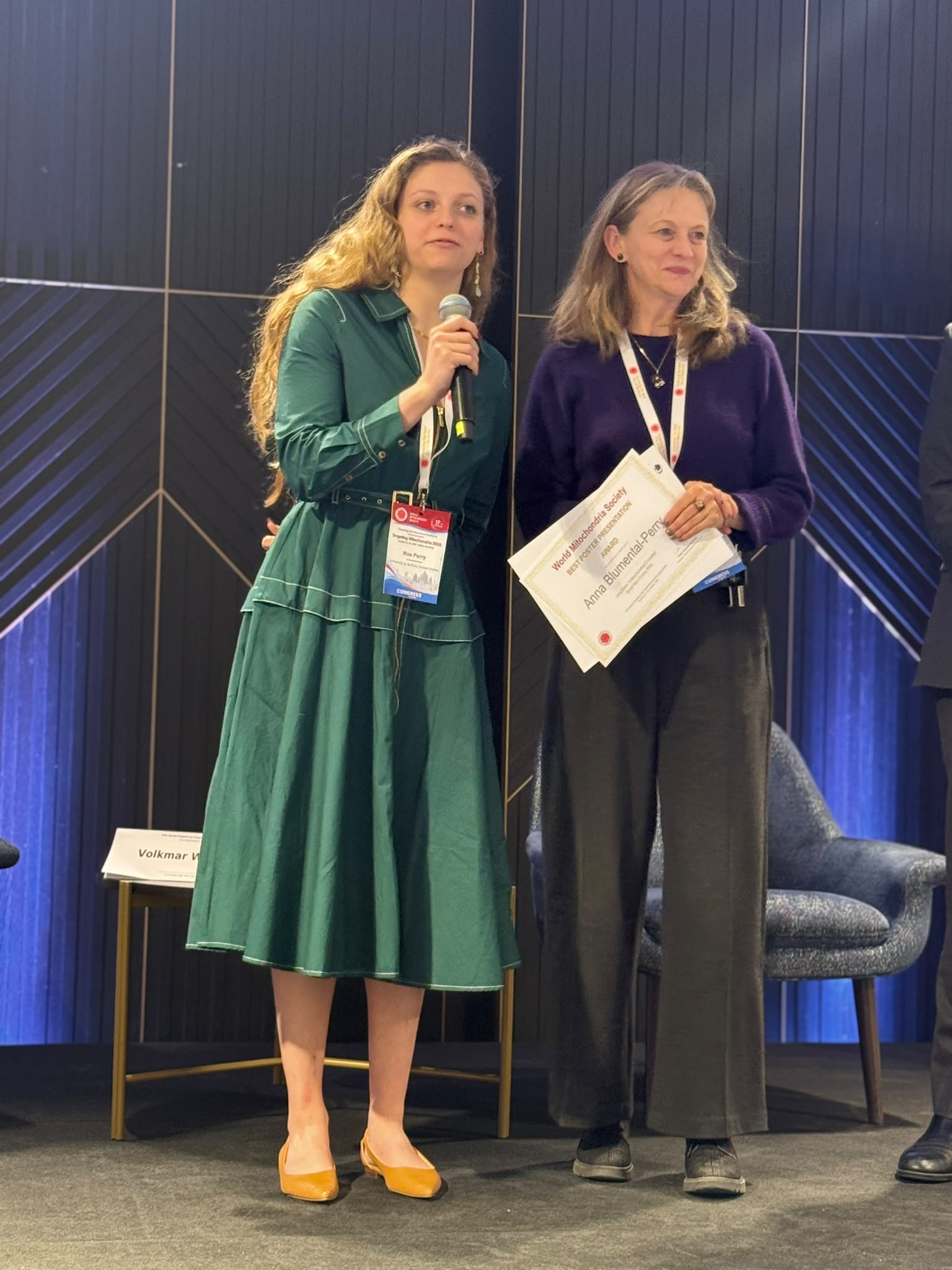 Best Poster Presentation Award 2026: Can a Tiny RNA Help Cells Recover from Stress? At Targeting Mitochondria 2026 in Berlin, Dr. Anna Blumental Perry University at Buffalo, USA, received the Best Poster Presentation Award for research exploring a surprising way mitochondria communicate with the rest of the cell.
Together, these four awards reflect the spirit of WMS:
celebrating bold ideas, rigorous science, and a dynamic vision of mitochondria as central players in health, disease, and longevity.
Dr. Micol Falabella